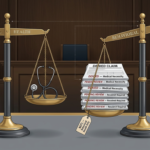
Medicaid oversight depends on information.
States rely on reports to understand who is covered, what care is delivered, how providers are paid, and whether the system is working as intended. Those reports are detailed, structured, and submitted on schedule.
They are also largely controlled by the same organizations being evaluated.
For companies like Centene Corporation, data is not just a record of operations. It is the primary lens through which states see performance. And in many cases, it is a lens states cannot independently verify in real time.
The Source of Truth That Isn’t Independent
Managed care contracts require extensive reporting. Enrollment data, claims activity, network adequacy, grievances, quality metrics.
Centene produces these reports using internal systems that aggregate information across its subsidiaries, vendors, and platforms.
States review the outputs.
What they rarely have is direct access to the underlying data streams that generate those outputs. Verification happens later, through audits that sample records rather than reconstruct the full picture.
By the time discrepancies are identified, the reporting period has passed.
Data That Moves Faster Than Oversight
Centene operates at a scale where data changes constantly. Members enter and leave coverage. Claims are submitted and adjusted. Provider participation shifts.
These changes are reflected in internal systems immediately.
Oversight does not move at the same speed.
State agencies depend on periodic reports. Monthly, quarterly, annual. Each report captures a moment already in the past.
Between those snapshots, the system evolves without direct visibility.
The Limits of Audit
Audits are the primary tool states use to validate reported data.
They are designed to detect error, not to monitor behavior continuously. Auditors review samples, test compliance, and issue findings after the fact.
This approach works for identifying clear discrepancies. It struggles with patterns.
If delays are systemic but documented correctly, they pass review. If network listings are technically accurate at the time of submission but outdated in practice, they meet requirements.
The audit confirms that the report exists. It does not always confirm that the report reflects reality on the ground.
Fragmentation as a Barrier
Centene’s structure complicates verification.
Data flows through multiple entities. Pharmacy operations, behavioral health services, claims processing, and analytics are often handled by different subsidiaries or vendors.
Each system maintains its own records.
Bringing those records together into a single, consistent view requires integration that states do not control.
When questions arise, answers depend on the company’s ability and willingness to reconcile its own data.
When Metrics Replace Access
States rely on metrics to assess performance.
Network adequacy is measured by provider counts. Access is inferred from directories. Quality is reflected in reported outcomes.
These metrics depend on accurate data.
When the data is incomplete, delayed, or selectively framed, the metrics still produce results. They just do not describe what patients experience.
A provider listed as active may not be accepting patients. A resolved grievance may not have restored care.
The numbers close. The gap remains.
Why Control Matters
Data control shapes accountability.
When the entity being evaluated also controls the data used for evaluation, oversight becomes reactive. States respond to what is reported rather than what is happening.
This dynamic does not require intent to mislead. It is structural.
Even accurate data can create a partial view if it is not independently verified in context.
The Cost of Limited Visibility
For patients, the consequences are indirect but real.
Decisions about contracts, renewals, and enforcement are based on reported performance. If that performance appears stable, corrective action is less likely.
Providers continue operating within systems that may not reflect their experience. Complaints remain localized rather than recognized as patterns.
The system continues as reported, not necessarily as lived.
A System That Trusts Its Own Reporting
Medicaid managed care depends on trust.
States trust contractors to report accurately. Contractors trust their systems to capture reality. Patients trust that oversight will correct what goes wrong.
When data cannot be independently verified in real time, that chain weakens.
Trust becomes the mechanism of oversight.
Conclusion
Centene’s data control is not just a technical issue. It is an accountability issue.
States depend on information to manage billions in public funds and ensure access to care. When that information cannot be fully verified, oversight becomes limited by design.
The system continues to produce reports that meet requirements.
The harder question is whether those reports reflect what is actually happening.
Until states have the ability to see beyond submitted data and into real time operations, the gap between performance on paper and performance in practice will remain.
And in that gap, accountability becomes harder to measure, and easier to miss.